
Knowledge is Power. Ignorance is Powerlessness
FORWARD-LOOKING RWANDANS SHOULD ENROL IN THE GOVERNANCE INSTITUTE OF RWANDA TO TRANSFORM THEMSELVES INTO THE BEST VERSION OF THEMSELVES
Do you owe it to yourself to understand that no nation or region in the world is preordained to remain poor or prosperous and that historically, leadership determine these outcomes? Do you owe it to yourself to thoroughly examine how successful nations are led effectively, efficiently, transparently, and accountably? Do you owe it to yourself to explore how successful nations develop and deploy governance professionals to design, implement, monitor and evaluate and continuously improve development policies for better results? Do you owe it to yourself to examine and understand how successful nations embrace fully evidence-based an policymaking by putting evidence from research at the heart of policy development and implementation?
If you are ready to soak in the above knowledge, enroll in the Governamce Institute of Rwanda and delve into socio-economic development theory and the successful case studies of how formerly poor countries became economic powerhouses. In this course, you will discover that no country or region of the world is doomed to poor. On the contrary, becoming prosperous is a choice. We will in this course that a leadership embracing governance professionalism has been the missing link in Rwanda’s history.
Section One — PROSPERITY AND POVERTY ARE CHOICES AND NOT PERMANENT FEATURES OF ANY COUNTRY OR GEOGRAPHICAL REGION OF THE WORLD
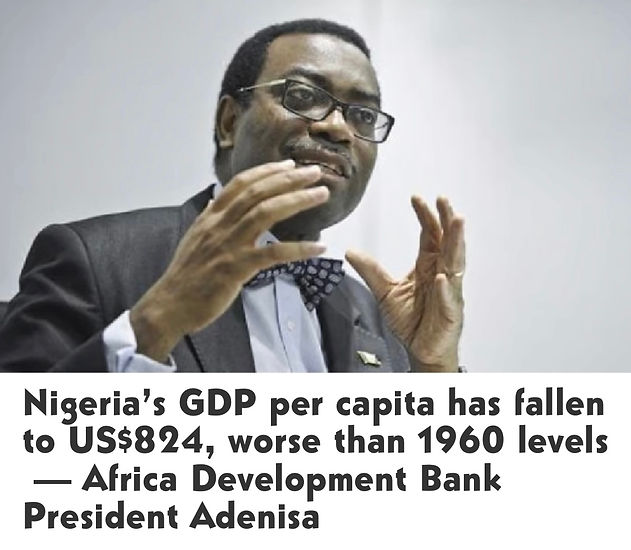
The initial segment of the course examines the underlying reasons why no country or geographical region is destined to remain in a state of poverty or prosperity once it has transcended poverty.
In this segment of the course, we examine development theories and explore the world’s development history. The 18th Industrial Revolution in Britain marked the change from an agrarian and handicraft economy to one dominated by industry and machine manufacturing. Thereafter, the Industrial Revolution spread across the world, introducing novel ways of working and living and fundamentally transforming society.
This section investigates the fundamental question concerning the prosperity and poverty of nations by addressing a central inquiry: What factors contribute to the prosperity of certain nations, while others persist in facing challenges related to poverty? And why has Africa performed very poorly compared to other regions that experienced rapid industrialization and exceptional economic growth since the 1960s to the present?
Section Two — UNDERSTANDING THE MEANING OF SOCIOECONOMIC DEVELOPMENT, GOVERNANCE AND INNOVATION
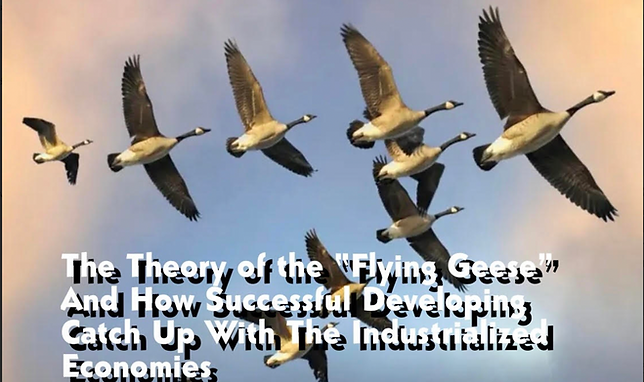
To enable learners in the course to quickly grasp the meaning of socioeconomic transformation, the course delves into the "flying geese" theory of economic development. The "flying geese" theory of economic development describes how countries move through stages of industrialization in a sequential, hierarchical manner, similar to the formation of flying geese. As a leading country, the US for example, becomes more developed, and finds it increasingly expensive to produce labor-intensive goods. This pushes the industrialized country to move those industries to the developing countries with lower labour costs, where they can be produced more efficiently. The "follower" countries then specialize in these industries, leading to their own economic growth and development.
Section Three — UNDERSTANDING THE CENTRALITY OF DEVELOPMENTAL LEADERSHIP AND CASE STUDIES OF GREAT LEADERS WHO TRANSFORMED THEIR COUNTRIES INTO PROSPEROUS NATIONS IN A SINGLE GENERATION

As we see in this segment of the course, leadership plays the key role in sustainable economic growth as it involves providing opportunities for growth and progressive developments. There can be socioeconomic transformation without a leadership that fully grasps and invests in first rate infrastructure as well the critical mass of human capital to sustain the infrastructure. Asia’s phenomenal economic development is attributed to inspiring leaders who were the backbone of the early stages of each Asian economy. China, the second largest economy in the world transformed itself from a centrally-planned closed economy in the 1970s to a manufacturing and exporting powerhouse over the years. Deng Xiaoping’s transformational policy led to a more open and economic focused nation, lifting almost half of its population out of poverty, shifting them from middle income to a high income status. Put another way, China’s 1978 “open door policy” attracted foreign investment that turned it into a US$17 powerhouse it is today. China used the flying geese theory by attracting industries which were increasingly expensive to produce in the more advanced economies, such as the US and Japan.
Before China’s leap, the Asian Tigers of South Korea, Hong Kong, Singapore and Taiwan were the early starters of a mature industrial economy owing largely to the commitment of their leadership to drive this agenda. The growth of the economies was based on the expansion of the manufacturing industry and growth of exports. They had established ports, rapidly developing economies, an educated population and robust infrastructure. They relied heavily on exports of manufactured goods by highly competitive industries, and therefore quick to explore international markets. By 2025, India had replaced Britain, its former colonizers, as the world’s fifth-largest economy with US$3.5 billion in GDP. In 1985, Vietnam’s GDP was US$14 billion versus Nigeria’s US$73 billion. By 2023, Vietnam’s GDP had soared to US$429 billion against Nigeria’s US$363 billion. Vietnam also used the flying geese theory by attracting industries that were becoming increasingly more expensive to produce labor-intensive goods in the more advanced economies than itself.
Section Four — UNDERSTANDING HOW SUCCESSFUL NATIONAL LEADERS BUILD AND EMPOWER GOVERNANCE PROFESSIONALS TO TRANSFORM NATIONAL ECONOMIES

In this part of the course, we examine who the governance professionals, what they need to know, do and deliver to support national economic development.
Governance professionals are individuals responsible for ensuring a country operates efficiently, ethically, and complies with leading practices. They work to implement policies, monitor compliance, support national leaders by fostering a culture of transparency and accountability. Essentially, governance professionals act as the "eyes and ears" of the country, ensuring that the government adheres to regulations and best practices.
In this part of the course, we will delve into a more detailed breakdown of governance professionals and their core role such as designing, implementing, monitoring, evaluating and maintaining the country’s governance framework and priorities.
Section Five — GRASPING THE FUNDAMENTAL TRUTH THAT REAL POLICYMAKING IS A SCIENCE COMPRISED OF EVIDENCE-BASED PLANNING, EXECUTION, AND EVALUATION OF OUTCOMES IN TERMS OF IMPROVED LIVES

In this part of the course, we pay attention to the imperative of evidence-based policymaking for results. Evidence-based policymaking is a process that uses scientific evidence and data to inform policy decisions, aiming to improve outcomes and reduce policy failures. It contrasts with policymaking based on ideology, intuition, or anecdotes. This approach emphasizes the importance of rigorous research and evaluation in guiding policy development and implementation.
Here's a more detailed look at evidence-based policymaking:
Key Principles:
-
Data-Driven Decisions: Policy decisions are grounded in objective evidence, data, and research findings rather than personal opinions or assumptions.
-
Focus on Outcomes: Policymakers are concerned with the effectiveness of policies in achieving desired outcomes, and they use data to evaluate the impact of interventions.
-
Transparency and Accountability: The process of evidence-based policymaking is transparent, allowing for public scrutiny and accountability for policy choices.
-
Iterative and Adaptive: Policy development is seen as an ongoing process, with policies revised and adapted based on new evidence and evaluation findings.
In this course, learners will fully grasp the imperative and benefits of evidence-based policymaking in these areas:
-
Improved Outcomes: Policies informed by evidence are effective and achieve their intended goals.
-
Reduced Policy Failures: By relying on data and evidence, policymakers avoid making decisions that are not supported by evidence, potentially leading to wasted resources or negative consequences.
-
Enhanced Public Trust: Transparency and accountability in policymaking builds public trust and support for government actions.
-
More Efficient Resource Allocation: Evidence-based policymaking ensures that resources are used effectively and efficiently to achieve desired outcomes.
Concluding Our Course — WHY RWANDA’S SOCIOECONOMIC HISTORY IS TRAGEDY
When the German colonists took charge of Rwanda, the country was in crisis after a palace coup. The Belgians soon inherited Rwanda from the Germans after their defeat in World War Two. When the Belgian granted independence to in 1962 after 30 years of Belgian rule, Rwanda was in shambles. The Belgians built neither infrastructural capital nor human capital.
Compare with next door in Uganda under the British rule. In the case of infrastructure, the British East African Railway, also known as the Uganda Railway, was a significant project during British colonial rule in East Africa. It was built between 1896 and 1901 to connect the interior of Uganda with the Indian Ocean at Mombasa. This railway was a major infrastructure project that had a profound impact on the region, facilitating trade and development. The British built the Owen Falls Dam which was completed in 1954 as part of a larger colonial project to increase Uganda's electricity capacity. Regarding human capital, the British established Makerere University in Uganda 1922 as a technical college, Makerere University and affiliated to the University of London until 1963 when it became one of the three constituent colleges of the University of East Africa.
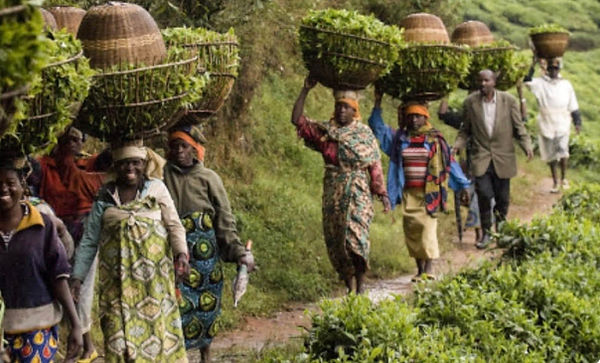
The Belgians left nothing of the sort in Rwanda. The three Rwandan post-independence regimes hardly improved Rwanda’s human capital and infrastructural capital. It still takes a week to transport bulky imports and exports from Rwanda to the seaport of Dar Es Salaam in Tanzania and slightly less to Mombasa, Kenya. Human capital remains scarce in Rwanda where the 2024 Statistical Yearbook shows that only 3 percent of Rwandans aged between 16-30 years have acquired tertiary education. It gets much worse - 91.3 percent of the Rwandan labour force work in the informal sector mainly as subsistence agricultural workers.